
EATING DISORDERS -The “Whats-” and “Whys-”
Eating disorders are neither the “diets gone too far” nor the phases or choices.

According to DSM-5 feeding and eating disorders are characterized by a persistent disturbance of eating or eating-related behavior that results in the altered consumption or absorption of food and that significantly impairs physical health and psychosocial functioning.
Major types of Eating disorders-
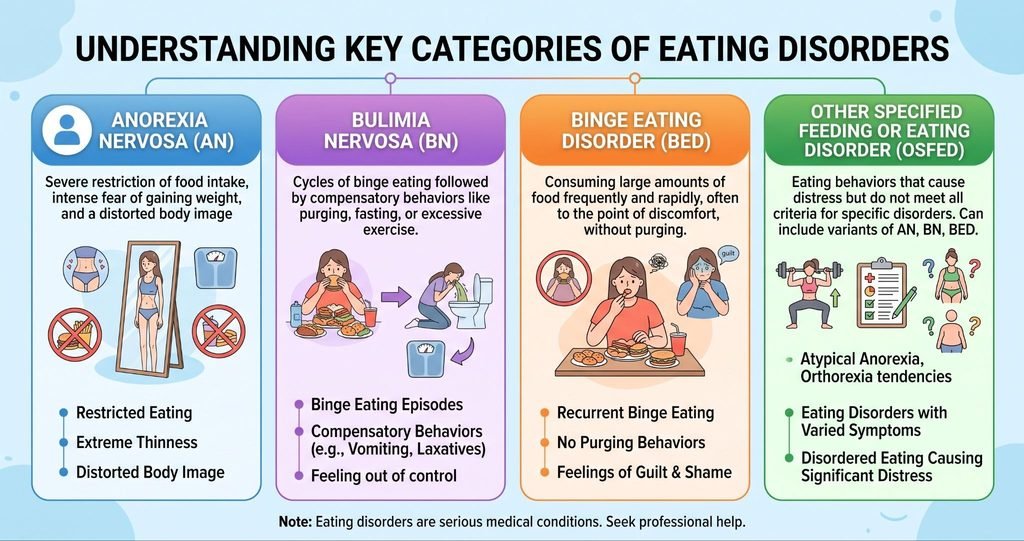
(Aman K., 2026)
What contributes to Eating disorders?
Eating disorders do not have a single cause and they tend to arise from multiple interacting factors.
(Aman K., 2026)
Of note, genetics may increase susceptibility – but the environment shapes the expression.
Research suggests-
- Moderate heritability for eating disorders, suggesting genetic vulnerability plays a meaningful role. (Thornton et al., 2011)
- The exposure to thin-ideal media imagery, weight stigma and societal pressure to equate one’s worth with appearance are linked to body dissatisfaction and disordered eating behaviors. (Grabe et al., 2008)
The aftermath: More Than Food
Eating disorders impact not just one, but nearly all the body systems.
- Physical consequences include malnutrition, dehydration, electrolyte imbalance, gastrointestinal complications, hormonal disruptions, cardiac abnormalities and bone density loss. (Westmoreland et al., 2016)
- Psychological consequences can include depression, anxiety, obsessive thinking and increased suicide risk. (Hudson et al., 2007)
- Social consequences are isolation, strained relationships, academic or occupational decline and reduced quality of life.
So, what works: Treatment & Recovery
Recovery is possible – especially with early intervention. Effective treatment usually requires a multidisciplinary approach, including:
- Medical monitoring is the first approach, to stabilize physical health and address complications.
- Nutritional rehabilitation to restore adequate intake and normalize eating patterns.
- Psychotherapy approaches include Cognitive Behavioral Therapy (CBT-E), Family-Based Treatment (FBT) for adolescents and Dialectical Behavior Therapy (DBT) for emotional regulation. (Treasure et al., 2020)
- Medication Management when co-occurring conditions such as depression and anxiety are present. Early treatment significantly improves prognosis and reduces long-term impairment.
Why Awareness Matters?
These eating disorders are often hidden behind other factors such as high achievement, perfectionism or socially praised dieting behaviors.
Understanding the contributing factors involved helps us:
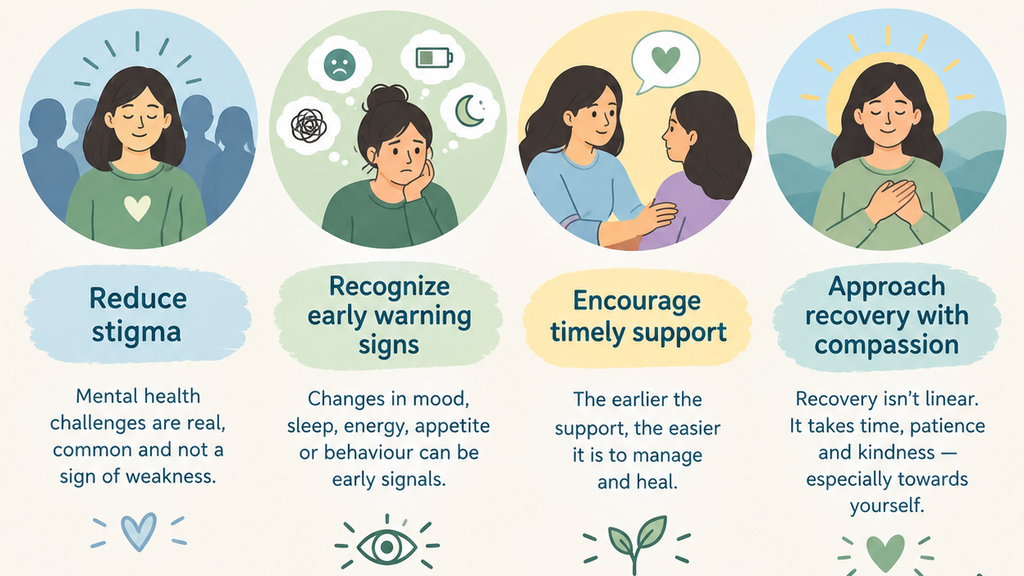
(Aman K., 2026)
These conditions are not about vanity, they’re about vulnerability.
Keep in mind, healing isn’t simply about food. It is about restoring safety, flexibility, self-worth and above all, balance. And that restoration is possible.
References-
Kaur, A. (2026), Visual Summary of categories of eating disorders, [Image created with Google Gemini]
American Psychiatric Association. (2013). Diagnostic and statistical manual of mental disorders (5th ed.).
Grabe, S., Ward, L. M., & Hyde, J.S. (2008). The role of media in body image concerns among women: A meta-analysis. Psychological Bulletin, 134(3), 460-476.
Thornton, L. M., Mazzeo. S. E., & Bulik, C. M. (2011). The heritability of eating disorders. Current Topics in Behavioral Neurosciences, 6, 141-156.
Westmoreland, P., Krantz, M. J., & Mehler P. S., (2016). Medical complications of anorexia nervosa and bulimia. American Journal of Medicine, 129(1), 30-37.
Treasure, J., Duarte, T. A., & Schmidt, U. (2020). Eating disorders. The Lancet, 395(10227), 899-911.
Hudson, J. I., Hiripi, E., Pope, H.G., & Kesseler, R.C. (2007). The prevalence and correlates of eating disorders in the National Comorbidity Survey Replication. Biological Psychiatry, 61(3), 348-358.